Menu
For families, Komuna e Parisit and Myslym Shyri, both rated 8/10 on parks, schools and walkability. For nightlife and the strongest Airbnb demand, Blloku and Pazari i Ri, if you accept the noise and the price. Gated villas sit in Farkë-Lundër and along the Rruga e Elbasanit corridor, and Don Bosko and Fresku offer gentrifying value.
Blloku was the closed quarter of the Communist era. Today it has the city's densest mix of bars, boutiques and offices. The district table rates it 8.5/10 on prestige, walkability and safety and is just as clear about the trade-off: traffic, noise, parking, and a capped rental yield, because prices have already outrun rents. About 27% of buyers in the immediate centre are non-residents. They come for the same liquidity that makes resale easy.
Pazari i Ri, the market square renovated in 2016, is the city's best Airbnb zone by a clear margin, with tourist foot traffic, restaurants and a genuine "old town" feel. For a resident, that same mix is the downside. The district serves visitors passing through rather than neighbours settling in.
Komuna e Parisit sits beside Tirana's Grand Park, surrounded by embassies and families instead of nightlife. The KB's own note calls it "family-prime without Blloku's noise", and the main complaint there is parking, not safety or schools. Myslym Shyri gives you the same idea for less money: a shopping street that doubles as "the most convenient residential centre for families". It also has the highest local liquidity of any district DomLivo tracks, so you can resell easily if your family's needs change.
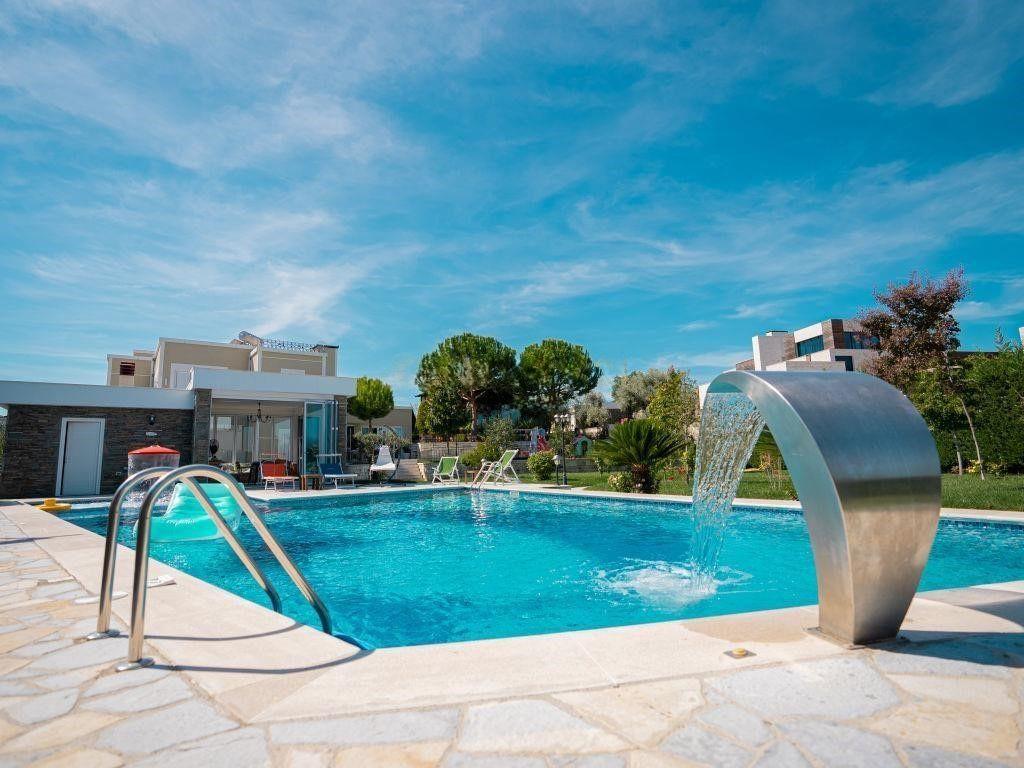
A gated-villa segment sits above the apartment market altogether. Farkë/Lundër, near Lake Farka, anchors it with Rolling Hills, Piccadilly, Farka Lake Shore and other projects aimed at expat management and diplomatic tenants. The Rruga e Elbasanit corridor, home to the US, Dutch and Spanish embassies, sits at the other end of the segment. It has the most expensive lots in the city, and almost nothing new has gone up there in years. You can't walk to everything from either one. Both give up proximity in exchange for space, quiet and a gate.
Don Bosko is dense and lively, and it is gentrifying for real: cafés, a market, a school (GDQ), and rents €100-300 a month below Blloku for a similar flat. Fresku, on the eastern slope toward Dajti, rose 16-27% after a new road connected it to the city's Grand Ring. It lies furthest from the traffic-heavy centre, so it also has the cleanest air of any district on this list. Its one real weakness is structural. The whole district depends on that single road link, and anything that disrupts the road disrupts the district.
Kombinat is a 1950s textile-workers' town six kilometres out, with new builds from €1,000/m². On this list it is the cheapest district with a real history behind it instead of an anonymous new-build front. Ali Demi is "old Tirana" in a different sense. It has older housing stock, the Continental Hospital and the Bektashi World Centre nearby, and it is gentrifying at a good price-to-centre ratio.
Astir/Unaza e Re has the largest new-build pipeline in the southwest, aimed mostly at young families priced out of the centre. That pipeline also gives it the city's clearest oversupply risk. Reference prices there jumped 76% in 2023 alone, and few districts can sustain that pace. Kashar, the western corridor toward Durrës, is betting that the Tirana-Durrës railway will turn a "dormitory suburb by the highway" into a place with its own identity. Until the railway is finished, it stays exactly that. Both districts work as an affordability trade. As a bet that the neighbourhood grows into something more before you need to sell, they are weaker.
Ratings don't replace walking the street yourself at the hour you'd actually be there. A Friday night in Blloku and a Tuesday morning in Komuna e Parisit will tell you more than any score. Once you've picked a district, the purchase works the same way wherever you land: a notary, ASHK, and the same title checks whatever the neighbourhood's character.
Komuna e Parisit and Myslym Shyri. DomLivo's district tracking rates both 8/10 for parks, schools and walkability, and Myslym Shyri is the more affordable of the two.
Blloku or 21 Dhjetori if you want nightlife and walkability. Don Bosko has the same energy at a noticeably lower rent: a comparable flat costs €100-300 a month less than in Blloku.
Both. Of the districts DomLivo tracks, it is the cheapest one with a real identity: a former textile-workers' town, not an anonymous new-build zone. It is also gentrifying, starting from a low base.
Astir/Unaza e Re and Kashar have the most new supply and the least established identity. That works if you buy purely on price. If you plan to live there for years, look harder before you commit.